Showing posts with label captivity. Show all posts

Sunday, 7 November 2010

Dolphin (including Orca) intelligence

Today I will be talking about dolphin, and orca, intelligence. But first, BREAKING NEWS.
Ric has been over in Taiji waiting to attend a conference with the Taiji Mayor, to openly discuss the dolphin hunt and the threat of mercury poisoning to the Japanese people due to the sale of the dolphin meat. The conference was meant to be a open and free place to discuss concerns on both sides, and was also meant to have free media. However, the questions that were due to be asked to the Mayor ended up having to be submitted and certified a week in advance, and there were also very rigorous restrictions on the press and media coverage. The meeting was due to take place on the 3rd Nov, but Ric released a statement late on the 2nd explaining the corruption and cover-ups within the conference, so he instead boycotted the meeting and went back to the Cove to make a stand against the Mayor and indeed all those involved. You can see the statement at his blog.

My best wishes to Ric and Linc, and indeed all those who are over there trying to make a difference for dolphins, the people of Taiji and the people of Japan, good luck to you all at this difficult time.

     So, onto todays' topic- dolphin intelligence. This is quite a large topic again, but I am only going to go over it briefly, as quite frankly I am no scientist. To begin with then, how smart are dolphins? And why are they so smart? Well, this is the part of the argument that deals with the 'sciency' bit, so I shall get it out the way first. In February of this year, there was a conference held by the American Association for the Advancement of Science (AAAS), in which a couple of dolphin experts spoke on behalf of dolphin intelligence. One of these experts was Dr. Lori Marino, from Emory University, who put forward the argument that dolphins are on par with primates, both in brain size and capacity. She explained how she had performed MRI scans on dolphins and found that their brain size was second in mass to the human brain, when regarding the body size/brain size ration. In other words, the dolphin's brain is five times larger than is expected for their body size, whereas a humans is only two more than that, at seven times bigger. This is quite a revelation, as the fact is that many still refer to dolphins as 'cute' and 'smiley', when in reality they are so much more intelligent than anyone has ever imagined. Dr. Marino also discussed how dolphins have a larger neocortical volume than humans, and an abundance of 'spindle cell' nerves, meaning that their emotional and intellectual connections are hugely similar to primates and indeed humans. They are highly self-aware and sophisticated, and also form intricate and complex bonds within their family group, and their own kind. Dr. Marino explained the results of her 2001 study, which showed that dolphins can recognise themselves in a mirror, proving that they have self-awareness just like we humans do. 

       This awareness of themselves and their surroundings makes it hard to believe how much they feel and understand when they are watching and listening to their family and friends getting slaughtered in their own habitat. They must understand, apprehend and dread their impending death, something which is truly horrible to comprehend. The argument of self-awareness is one that is verified by Ric O'Barry, who explains that Cathy used to watch herself on TV, and even recognise when it was another dolphin being shown. Another speaker was Dr. Diana Reiss, who is from the Hunter College, City University of New York. She showed some videos of dolphins seeing themselves in a mirror, as well as using symbols on a large board to receive specific objects that they wanted. She also explained that baby dolphins could recognise themselves form one year, whereas our beloved domestic dogs and cats cannot. Dr. Marino also went on to explain just how dolphins got to be so intelligent and intellectually developed, the first reason occurring 39 million years ago, when odontocete's (cetaceans) brains began to develop in size. Then 15 million years ago, another change, which occurred due to the need for survival- the dolphins' communications capacity developed further, due to change in their social ecology. So, it seems as though their species has advanced and intellectually developed just as much as our own. Which begs the question, why do we still insist on keeping them in captivity?


Dolphin brain size. (Picture from Google images)

A good video about dolphin intelligence can also be found here.

     Captivity has about a million arguments against it, both ethically, morally and scientifically. Yet for some reason they are never enough. So here I will be discussing a mere selection of the arguments against the captivity of cetaceans, on the basis of their advanced intelligence. The captivity of cetaceans is widely questioned, yet more recently it has not just been about the guilty conscience or the moral difficulty that it puts upon us humans, but the actual scientific implications and consequences of captivity that has sparked the most controversy. It was argued at the AAAS conference by Dr. Marino that the mental strains put upon dolphins in captivity is 'potentially psychologically harmful' and that the captivity itself 'presents a misinformed picture of their natural intellectual capacities', in other words, even the best captive conditions in the world are still nothing like their natural habitat and that going to see a dolphin show does not do their immense natural intelligence justice. The boring, confined and lonely conditions are one of the main problems with keeping cetaceans alive in captivity, as they can often develop stress-induced disorders which can lead to death. An example of this would be Hugo the orca, who ended up killing himself by banging his head against the pool wall, and also Poncho the dolphin, who got so bored and distressed he would eat footballs whole and pop them in his mouth to swallow them. When he passed away suddenly they examined his stomach and found several balls, amongst a whole plethora of other objects. This vice could only have been picked up out of stress and boredom, proving that the habitat Poncho was forced to live in did not provide him with enough intellectual, emotional and physical stimulation. There are a whole selection of cases like this, as the emotional starvation and lack of psychological stimuli takes its toll on these sensitive creatures. 
        
       As I have previously quoted in the Captivity topic, Randall L. Eaton argues: 'For the most curious, exploratory, mobile, playful creature on the planet, an aquarium must be very boring indeed.' From the same book, The Animal Ethics Reader, another academic Mark Simmonds explains that the bottlenose dolphin may in fact be one of the 'most sophisticated non-human imitator, suggesting that their ability to remember certain verbal and non-verbal characteristics and imitate them is a 'seemingly unique combination of abilities among non-human animals'. In other words, it is impressive enough that they can imitate each other's behaviour, let alone a humans. He also explains that dolphins have a talent of manipulating objects, despite obviously having no fingers or thumbs. An example of this are the dolphins of Sharky Bay in Australia, who are often seen carrying sponges in their mouths when looking for food on the sea bed, in order to protect themselves from the spines of sea urchins. This type of behaviour is not only extremely logical, but also very resourceful, further proving the immense intelligence of these clever creatures. Another more famous example of this manipulation would be the bubble-blowing that is seen underwater. The dolphin needs to use self-monitoring techniques in order to manipulate and produce the desired type of bubble, which shows that they are capable of forward-planning, and thus reasoning.

 A dolphin playing with bubble rings, often a type of play and escapism. (Photo from Google images)


    However, the most important argument Simmonds addresses is that of the cetaceans emotional intelligence- that even though it would be easier for certain people to believe they 'can't have feelings', they are in fact just like us, and feel pain, stress, love and sadness. He points out that they feel, and show, parental love, altruism and grief, probably the most 'human' feelings that could be felt, by animal or human. The fact that orcas, and indeed dolphins, stay in their family groups throughout their lives is not unknown, and  the case of the two male orcas who swam to the spots they used to frequent with their older female companion (thought to be their mother), in order to grieve really hits home, as it is such a common way of dealing with grief in the 'human world'. He also explains that they are capable of showing parental love and joy, as exhibited by orcas and proven by N. A. Rose, an experienced field scientist. Another quite beautiful finding was that of the false killer whales in 1977, who rallied round their injured group companion in order to protect him from a shark that was swimming nearby. Every time the shark approached, they would 'flail their tails' to warn it off, and despite the risk of sun exposure and stranding, they kept that way for three whole days until he passed away. Another key instance of this protective behaviour is the capturing of the orcas of Puget Sound in 1970, the capture in which Lolita was taken. 

    There have been many reports on the drowning of mothers who were thrashing about so much in order to protect their babies from captures that they drowned themselves. These acts of kindness and devotion are surely what every person can relate to. To sum up and indeed strengthen all these findings, Simmonds warns of the 'interspecies communication problems', i.e. the fact that cetaceans in captivity are so ignored and misunderstood, that their displays of stress, anxiety and aggression are totally pointless and go unheard. An example of this would be the case of the dolphins who display 'humping' behaviour, which I discussed in the Captivity post earlier. This thought that cetaceans are 'self-aware' is the argument for their right to life, as discussed by Paola Cavalieri in the Animal Ethics Reader. In her essay, Whales as Persons, she describes how their self-awareness and self-consciousness should grant them a right to life as they can understand and dread their 'discontinuance' on this earth.


A pod of orcas, baby in tow. (Photo from Google images)


    The differences between a captive life and a free life are too many to even list, and there is no denying how detrimental captivity is to cetaceans. And now we understand their ability to feel, to love and to hurt, surely it should mean the end of captivity? Of whaling? Of capturing them from their homes, away from their families?
No. As usual, human interests come first. That is profit to me and you. They mask it under 'research', 'education', 'pest control', but these animals are smart enough and sensitive enough to suffer at the repercussions of those interests. And what gives us humans the monopoly over other animals? They feel as we feel, and that means they should be shown the same compassion, mercy and sensitivity that we wish to be shown.

Thursday, 21 October 2010

Plan for post topics, and Dolphin Captivity

I was having a think last night and have come up with a rough plan of the topics I will be covering, and in what order. I think this will be best:
1. Taiji
2. Dolphin captivity and implications
3. Lesser publicised slaughters
4. Dolphin and orca intelligence
5. Orca captures in the past
6. Orca breeding today
7. Orca captivity and implications
8. Mortality rates in captivity
9. Famous cetaceans
10. Navy use of dolphins and whales, and dolphin therapy.
11.Whaling and the IWC
12. Current campaigns
13. List of dead, killed and living captive cetaceans
14. Shark finning, and shark product industry
15. Galapagos Islands
16. Current shark campaigns
17. Key cetacean and shark breeds

  And before you say 'hey sharks are not cetaceans!'- yes I know, but I think that their welfare and the issues surrounding them at the moment are just as relevant to any cetaceans. And to be honest I just really like sharks too, so thought I would include them to help get the word out about shark finning.

 So onto the next topic, dolphins in captivity and its implications. This is such a huge topic and deserves a huge post, so here goes. At the moment there are thousands of dolphins in captivity, in all the far reaching corners of the world. There is such a demand for them nowadays, and people just cant get enough. There are swim with dolphin programs, therapy, shows, you name it. Its as if every little girl now wants to be a dolphin trainer, or an orca trainer, and it is so sad to know how little they really know. This craze seemed to have started when the Flipper show was being aired on TV way back in the 1960s. It portrayed dolphins as intelligent, happy creatures that craved human contact and would risk their lives to save them. Like a cetacean Lassie almost. The role of Flipper was shared between several dolphins, but the main dolphin used was a female called Cathy. She and all the other 'Flippers' were trained by Richard (Ric) O'Barry, who back then was an aspiring young trainer based in Miami Seaquarium. He soon became a very famous trainer and was at the top of his game, that was until the death of his beloved dolphin Cathy. It was after the last series had finished that Ric had begun to notice she was looking depressed. It was then that she committed suicide in his arms. As he explained to Oprah Winfrey: 'She was really depressed... You have to understand dolphins and whales are not [involuntary] air breathers like we are. Every breath they take is a conscious effort. They can end their life whenever. She swam into my arms and looked me right in the eye, took a breath and didn't take another one. I let her go and she sank straight down on her belly to the bottom of the tank.' A heart-felt interview with Ric about the incident and about his work on Flipper can be seen here. It was from this point that he became a dolphin and whale activist, releasing and helping to liberate countless other captive dolphins. The argument that dolphins can commit suicide may indeed seem a far-fetched one, but it is not unknown that their emotional and indeed intellectual capacities are not far off our own, so suicide may in fact be a viable explanation for several incidences involving dolphins, and other cetaceans. 

       Recently there has been the story of the false killer whale jumping out of its performance tank in Japan. It attempted the leap once and failed, and then succeeded on the second try while his pool companions watched on in horror. It is safe to point out that the false killer whale was obviously aware of the implications of his actions- he could plainly see there was no water on the other side of the glass. So why did he try and escape? Ric argues that it was a suicide attempt, and it is one opinion that I would agree with. You can see the video of the incident here. Another interesting article on the idea of dolphin suicide can be found here. Another important point to raise here would be the story of Hugo the captive orca. He was originally captured in 1968 and was taken to Miami Seaquarium. He was used to keep Lolita company (more about her in the Famous Cetaceans topic), yet began to behave aggressively in shows. He eventually went into a very traumatised and depressed state, continuously banging his head on the tank wall, resulting in several serious injuries. He eventually had a brain aneurysm that caused his death in 1980. More on Hugo here.

Hugo being lifted after his death. (Photo from Google images)

So, captivity- what exactly are its implications on the dolphins it holds onto? Well, lets start with the living conditions for these dolphins. According to US regulations, a dolphin tank needs to be at least 30ft by 30ft, and 6ft deep. So that means in order for a dolphin to swim the length it does in the wild everyday, up to 50 miles, it would have to swim around the tank about 1700 times. Also, when you think that two or more dolphins may be sharing the tank at any one time, it makes the guideline size look like a swimming pool. The chemicals used in the tanks are also incredibly harmful, as they are difficult to keep clean and sanitary. The mental implications these small, boring tanks have on captive dolphins are extremely detrimental, and will be discussed later in this post. 

       The other important thing to consider when discussing captivity is of course the mortality rate, which is beyond justification. Dolphins die at an unbelievable rate when in captivity, from disease, depression, the squalid conditions, performance accidents, the list goes on. They are merely expendable commodities, their deaths do not matter, just as their lives do not matter. They can be replaced in a number of days and they are completely expendable. Some examples of deaths and causes of death are collisions during performance, one of which resulted in the death of 30 year old Sharky at Discovery Cove in 2008. They were performing a trick in mid-air and collided, resulting in the death of Sharky. This is purely unacceptable, to die whilst performing a trick for the public? It is immoral and beggars belief as to why they continue these shows. Anyway, I shall try and keep my rant to a minimum and just deal with the facts. Another death that was insignificant to the dolphinarium industry, yet so important to those opposing it, was the death of Poncho the dolphin at Miami Seaquarium in 1982. They found an array of objects in his stomach and it is a wonder her survived as long as he did, as they had obviously been in there for some time. A picture of this can be found here. It is no wonder why they wanted to keep that one hidden. More recently however, has been the deaths of four dolphins in the dolphinarium called Sealanya in Turkey. They all died within a week of each other, the reason yet is still unknown I believe. Although it will be surprising if any reason comes out at all, as it is in the interests of the park that they stay quiet. A very good news report on the full story can be found here. It is important to point out that these dolphins, and the others still at the park (and indeed all throughout Turkey) are from the drive hunts in Taiji. As quoted in the news article, 'They died psychologically while heading for Turkey'. A more successful story is that of Misha and Tom, two bottlenose dolphins trapped in a tiny 11m by 22m swimming pool in the middle of the Turkish town of Hisaronu. The conditions were appalling and they had endured 5 years of being fed frozen fish and floating on stagnant water before being brought to the attention of the Born Free Foundation. They have now been rescued and are currently living in a sea-pen. It just goes to show what public pressure can achieve. It is also important to include the recent death of Kalina the orca too, which unsurprisingly has not had a full explanation yet. She died at Seaworld Orlando on the 4th of October.


 Dolphins quite literally jumping through hoops at Sealanya. (Photo from Google images).


      When considering captivity, it is often a common assumption that these dolphins and orcas live in lovely, clean, bright blue waters, with the best health care and experts on hand. This is not always the case, especially in countries with lesser implicated animal rights, such as Egypt, Dubai, Korea, and as discussed earlier, Turkey. One of the most infamous places at the moment is Egypt, where there has been the case of the Taiji Four. At the end of September, four dolphins had been transported to Hurghada in Egypt from Taiji. They are to be the main attraction at a new oceanarium being built there. Note: it is no where near completion. They were being held captive in someones back yard swimming pool, which was green with waste and must not have been any bigger than your average kids' swimming pool. The dolphins must be an a terrible condition, both mentally and physically, and it is a wonder how they expect them to survive long enough to be moved to the oceanarium, let alone be trained to perform there. Fortunately, Ric O'Barry and his son have been out there trying to free them, or at least get them moved to a proper enclosure. You can follow the updates by looking on the Save Japan Dolphins blog, or follow this link to the first part of the story.

      So the question you may be thinking now is, why captivity? Why allow it? Well, apart from the immense profit for all those involved, from the hunters, breeders and trainers, all the way up to the owners of the oceanariums and dolphinariums, there is always the argument that it is for education and conservation, and when regarding dolphin therapy, therapy and rehabilitation. This of course is nonsense. All of it. And I am ashamed of those who believe that by paying for a ticket to a dolphin show they are getting some eductaion, that they are experiencing a real dolphin, and worst of all that they are helping to preserve them. The claims that the parks make about them providing an educational service to the public is absolute nonsense. They are in it for profit. They make millions upon millions of dollars a year profit and it is all because of the uneducated public buying a ticket thinking they will learn something from dolphins if they see a show. The behaviour shown by dolphins, and indeed orcas, in a show are a million miles away from their natural behaviours. How can they be expected to represent themselves and their species when confined in a space that is not even 1% of the size of their natural habitat? How can the paying public even think that by watching them perform tricks and sing and dance and jump through hoops, that they are watching a real dolphin? Or orca? All they are watching is a trained, submissive circus animal. They are trained not because they are happy to do the work, but because the trainers use negative reinforcement and food deprivation techniques to get the required results. These animals are just puppets that have been dominated and broken down, to the point where they have had to do drastic things in order to communicate their despair. Here I am obviously talking about Tilikum the orca at Seaworld Orlando, who in his captive life has demonstrated his unhappiness several times, leading to injury or death of the people involved. Yet still the show goes on, as the incidents were of course only described as 'horse play'. A good article on training dolphins can be found here, it has a good few insights from Ric, who trained at Miami Seaquarium. And of course, lets not forget Turkey here, as in the article I posted earlier it quotes: 'There are 11 dolphinariums in Turkey, but the number of dolphin experts is quite limited'. Thus proving that it really is all about profit. 

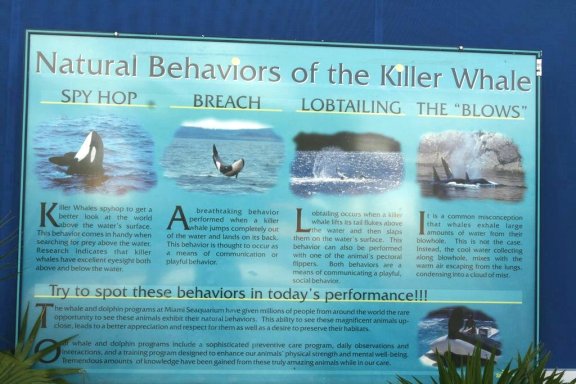
    The 'swim with dolphin' programs offered so widely are also just as bad, but not only for the dolphins. Studies have shown that being in the water with the dolphins puts people at risk from various bacteria and microorganisms. The full facts can be found here, as well as the full report on the hyperlink in blue. There have also been reports of dolphins trying to 'hump' people in the water, which may just seem like  innocent high jinks, but in fact may be very dangerous, especially if the person is a child or lesser-able bodied,  and the dolphin weighs up to 1200 lbs.  In fact, there is a video of such an incident on youtube. Note that it seems to be trained to perform such an action, as do the other dolphins in the other videos. Its appalling enough that any trainer would encourage that behaviour, let alone train it in the first place.The issue regarding 'dolphin therapy' is a complex one, and will be discussed in the later post- navy use of dolphins and whales, and dolphin therapy. So, back to the claims of education and conservation. Claims which are so ungenuine they are almost laughable. A few points to note here then, firstly the fact that the dolphins caught in Taiji who are sent to the Japanese oceanariums (in particular Taiji Whale Museum) to perform, are accompanied by their dead family members who are packaged in the restaurant for the paying visitors to eat during show intervals. Secondly, the Miami Seaquarium who claims to be educating the public about killer whales, and in fact has not got a clue. Their educational poster is totally incorrect, the 'false eye patch' does not exist.
Also, the other poster explaining 'natural' behaviour is laughable. The 'behaviour' seen in the show is trained and totally unnatural.


(Photos from Orca Network, Peter.P, 2007)

   I shall now briefly go on to explain some academic arguments against captivity, from the book The Animal Ethics Reader, 2nd edition, ed. Susan Armstrong and Richard Botzler. He argues against captivity for cetaceans, due to the mental and emotional consequences it has on them, and also the difficulty in keeping the facilities well managed. When talking about dolphins, he explains that 'for the most curious, exploratory, mobile, playful creature on the planet, an aquarium must be very boring indeed' (page 498). He also explains the morbidity of the life expectancy of captive dolphins and orcas, when compared to their natural life expectancy in the wild. He also stresses the need for social interaction for dolphins and whales in captivity. The human-dolphin relationship when under 'captive conditions' is so 'incredible' that is may prove how desperate the dolphins are to have a family-like bond and feel loved. It seems so meagre that they have to settle for the love and companionship of the paying customers and not their own kind.

  On that note, I end todays' topic, as I have so much to do and it is so late. I hope its been informative and I hope it wets your appetite for more. Believe me this is just the tip of the ice berg for captivity as a topic!! Good night. :)

Wednesday, 20 October 2010

Where to start? Taiji Dolphin Drive.

So I should be doing my uni reading right now, but as usual something is compelling me to learn and learn and learn. I have no one really to talk to about it yet, as I have missed all the Animal Rights society meetings so far, so I thought I will start a blog and see what happens. I just need to vent. And I need to help inform the people around me of whats going on out there, regarding cetaceans, and other marine life in general. I just want people to know. I believe that education is the key to change. I myself cant seem to stop looking at articles, websites, petitions, videos, films, books. It seems to have affected me in some way, and I just wish more and more people would realise the reality of whats happening around them.  And I dont even just mean this, I mean in everything. I am in a dilemma at the moment as to what career I want to go in when I graduate- the human rights side or the animal rights side. We shall just have to see how this blog ends up first I guess.

 So anyway, research. What have I learned today? I have learnt about the slaughter of dolphins the world over. So I guess I will start with the country that has had the most hype lately- Japan, and in particular a little fishing town called Taiji,Wakayama Prefecture.


     Every year, from September to March, the fishermen of Taiji go out on small boats to hunt for dolphins (mainly Bottlenose, Striped, Risso's and Pilot Whales), and drive them into a cove to be sold into the dolphinarium industry or slaughtered. It is called a drive hunt and claims up to 1800 lives a year. The hunt is (apparently) mainly for the dolphin meat, but according to the film 'The Cove' (2009) the majority of Japanese do not eat dolphin meat anymore, so much so that it was even being served up at local schools in order to get rid of the surplus. The amount of mercury in the meat is also at a very dangerous level, and is in fact slowly poisoning the local community and the population who eat it. Have a look at this, from 'The Cove'. So, why do they hunt if there is so little profit to be had in the meat trade? Is it tradition? Well yes in a way, as the Japanese have always been huge contributors to the whale and dolphin hunting industry, even from as early as the 17th C in Taiji. It could also be argued that it is due to over-fishing in the area- they are simply trying to take out the competition. However, the drive has recently been revived and expanded due to the ever-growing dolphinarium industry, and its huge demand for live dolphins.
    This is where the money comes from, this is where the supply and demand comes from, and this is why the drive hunt is now such a profitable operation for the people of Taiji and indeed Japan. A live, healthy and relatively attractive dolphin captured in Taiji can reach up to around $300 000 each. That means that even if they only sold two or three live dolphins out of a catch of about thirty or so, they would still make a huge profit. Buyers sent from dolphinariums, sea parks and aquariums from around the world line up on the shore to examine and bid for the best dolphins, while the rest of them are left in the cove overnight, separated from their babies and families, waiting for their fate to come the next morning. The main buyers nowadays are Turkey, Egypt, Dubai, China and even Japan itself. Apparently the US does not buy from Taiji anymore, but Captain Paul Watson, of the Sea Shepherd, believes differently. Check this out.

   Those 'lucky' enough to be bought will end up in some swimming pool- sized tank, or as I will discuss tomorrow, an actual swimming pool. The others are murdered using spears and knives, which are meant to be driven into the dolphins' neck, and kill them instantly. However, this is obviously very difficult to implement and supervise, considering it is done by a fisherman surrounded by water holding onto a terrified dolphin thrashing around. In the film 'The Cove', there is clear evidence that this 'humane method' is not the case at all, as dolphins are seen swimming around half-dead and the fishermen look as though they are just stabbing at the water aimlessly and mindlessly. It seems like carnage, and there is no way that the dolphins killed could have been killed humanely or indeed quickly. The footage of the dolphin who escapes and swims towards shore confirms this, as he is cut up and bleeding and eventually drowns, after at least a minute or so. The dolphins are then taken to the processing plant where they are butchered and packaged to be sold as meat. A good video to watch is the undercover footage of the slaughterhouse, by Save Japan Dolphins volunteer Leilani Munter. Some infamous pictures of the drive are shown below.


 Photos of a drive boat, the end result, and a dolphin head, from the Taiji drive hunt. (Photos from Goole images).

 So, to end this first post, some facts and figures about the Taiji drive hunt:
1. According to Wikipedia, as unpredictable as it may be, the drive of 2007 ended in the killing of 384 Striped Dolphins, 300 Bottlenose Dolphins, 312 Risso's Dolphins and 243 Pilot whales, which is a total of  1,239 cetaceans.
2. The fishermen have a permit from the Japan Gov. and refer to the drive as 'pest control'. This is seems quite dubious and it is as if the Gov. is only backing it due to the huge amount of money it brings into the country, and Taiji, each year.
3. 'The World Association for Zoos and Aquariums (WAZA) is the world's largest network of zoos and aquariums around the world. Dolphinariums that have conducted business with the dolphin killers of Japan have been welcomed into WAZA's network, although the trade in these dolphins clearly violates WAZA's Code of Ethics.' From savejapandolphins.org. Also, see here about this issue. It seems almost corrupt.

Anyway, after that I really must do some reading for my lecture tomorrow. But I thought that would be a good starting point as it seems to be one of the greater known issues of cetaceans at the moment. Any comments, thoughts or whatever please say. Thank you :)
Oh and I will be talking about the lives (and deaths) of dolphins in captivity next time.